
Incremental Spline Rolling, spline ve serration (tırtıl) profillerinin talaş kaldırmadan, soğuk şekillendirme yöntemiyle yüksek hassasiyette üretilmesine olanak sağlayan özel bir profil ovalama teknolojisidir.
Klasik dairesel spline ovalama kalıplarından farklı olarak incremental kalıpların diş geometrisi takımın tüm çevresi boyunca sabit değildir. Kalıp çevresi üzerinde özel olarak hesaplanmış progresif bir profil gelişimi bulunur. Bu geometri sayesinde kalıp döndükçe iş parçasına olan penetrasyon kademeli olarak artar ve spline profili kalıbın tek bir tam dönüşü içerisinde nihai geometrisine ulaşır.
Bu nedenle incremental spline rolling die yalnızca üzerinde spline profili bulunan dairesel bir kalıp değildir. Kalıbın çevresindeki her bölge, şekillendirme prosesinin belirli bir aşamasını temsil eder.
Spline Geometrisi Neden Bu Kadar Önemlidir?
Spline bağlantıları özellikle otomotiv, transmisyon, aktarma organları, elektrik motorları ve hassas mekanik sistemlerde tork aktarımı ve hassas eşleşme amacıyla kullanılır.
Bu nedenle yalnızca dişin nominal ölçülerinin doğru olması yeterli değildir. Profil formu, basınç açısı, diş aralığı/index hatası, major-minor çaplar, pim çapı üzerinden çap (DOP) ve profilin çevresel dağılımı parçanın fonksiyonunu doğrudan etkiler.
Incremental ovalamada bu hassasiyet daha da kritik hale gelir. Çünkü kalıp yalnızca nihai spline geometrisini değil, o geometriye hangi sırayla ulaşılacağını da üzerinde taşır.
Başka bir ifadeyle:
Takım geometrisi = Nihai spline profili + Şekillendirme sekansı
Bu nedenle incremental kalıpların tasarımı, konvansiyonel spline kalıplarına kıyasla ileri seviyede profil mühendisliği, kinematik hesaplama ve hassas CNC taşlama gerektirir.
Neden Soğuk Şekillendirme?
Spline profilleri frezeleme, azdırma, broşlama veya diğer talaşlı imalat yöntemleriyle üretilebildiği gibi, uygun parça geometrisi ve malzeme şartlarında cold rolling – soğuk ovalama yöntemiyle de üretilebilir.
Ovalama prosesinde malzeme kaldırılmaz. Kalıpların uyguladığı kontrollü basınç altında malzeme plastik olarak akar ve spline profilini oluşturur.
Bu yaklaşımın önemli avantajları arasında malzeme kaybının olmaması, yüksek yüzey kalitesi, kısa çevrim süreleri, yüksek tekrarlanabilirlik ve mekanik özelliklerde iyileşme bulunur.
Özellikle seri üretimde, saniyeler seviyesindeki şekillendirme süreleri incremental teknolojiyi oldukça güçlü hale getirir. Incremental proses için genel olarak 4 saniyenin altında çevrim süresi ön görürüz.
Incremental Geometri Nasıl Çalışır?
Incremental kalıbın temel özelliği progresif diş yüksekliğidir.
Kalıbın çevresi boyunca profil kontrollü biçimde gelişir. Başlangıç bölgesinde iş parçasıyla temas eden geometri daha düşük penetrasyona sahipken, kalıbın dönüşü devam ettikçe şekillendirme derinliği artar.
Basitleştirilmiş olarak proses:
İlk temas → Kademeli penetrasyon → Profil gelişimi → Tam spline derinliği → Kalibrasyon/çıkış
şeklinde düşünülebilir.
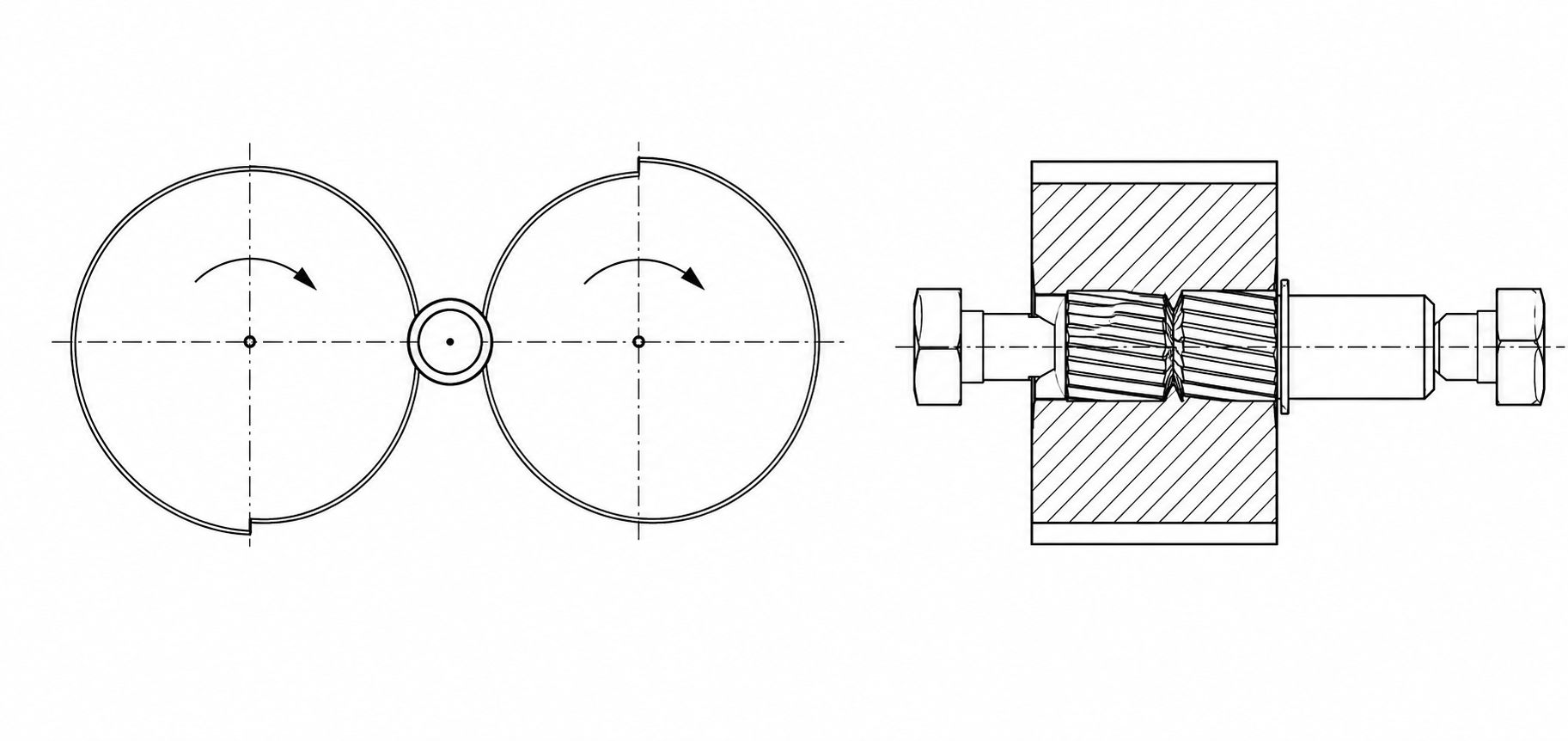
Dolayısıyla makinenin kalıpları klasik bas-çek spline ovalama prosesindeki gibi sürekli olarak radyal yönde iş parçasına ilerletmesi yerine, gerekli feed hareketinin önemli kısmı doğrudan kalıp geometrisinin içine tasarlanmıştır.
Bu, incremental kalıp tasarımının en kritik mühendislik noktalarından biridir.
Neden Tek Turda Ovalama?
Incremental spline rolling prosesinde kalıbın 360°'lik geometrisi aynı zamanda bir üretim çevrimidir.
Bunun nedeni kalıp çevresindeki dişlerin aynı geometrinin tekrarı olmamasıdır. Kalıbın açısal pozisyonu ilerledikçe profil de belirlenmiş bir şekillendirme sekansına göre değişmektedir.
1 kalıp devri = 1 tamamlanmış şekillendirme sekansı
Bir sonraki dönüşe aynı şekilde devam etmek, klasik simetrik dairesel takım (tırtıl ovalama topu) prosesinde olduğu gibi aynı nihai profil üzerinde tekrar tekrar kalibrasyon yapmak anlamına gelmez; çünkü incremental kalıbın çevresindeki geometrik sekans yeniden başlangıç bölgesine dönmüş olur.
Bu nedenle prosesin kinematiği tek dönüş üzerine tasarlanır. Bu yaklaşımın önemli sonucu ise son derece kısa çevrim süresidir.
Incremental Rolling ile Rack Dies (Kremayer Tarak) Arasındaki Fark Nedir?
Aslında iki teknolojinin temel şekillendirme mantığı birbirine oldukça yakındır.
Rack rolling prosesinde iki karşılıklı doğrusal kalıp bulunur. İş parçası bu kalıplar arasında yuvarlanırken rack üzerindeki progresif feed-in geometrisi malzemeye giderek daha fazla nüfuz eder ve spline profilini oluşturur. Makinenin ayrıca aktif bir radyal feed hareketi yapmasına gerek kalmadan gerekli penetrasyon rack geometrisinin içinde oluşturulabilir.
Incremental sistemde ise aynı prensip doğrusal kremayer geometrisinden dairesel takım çevresine taşınmıştır. Bu nedenle incremental ovalama takımı teknolojisini kavramsal olarak “daireselleştirilmiş kremayer ile ovalama” şeklinde düşünmek mümkündür.
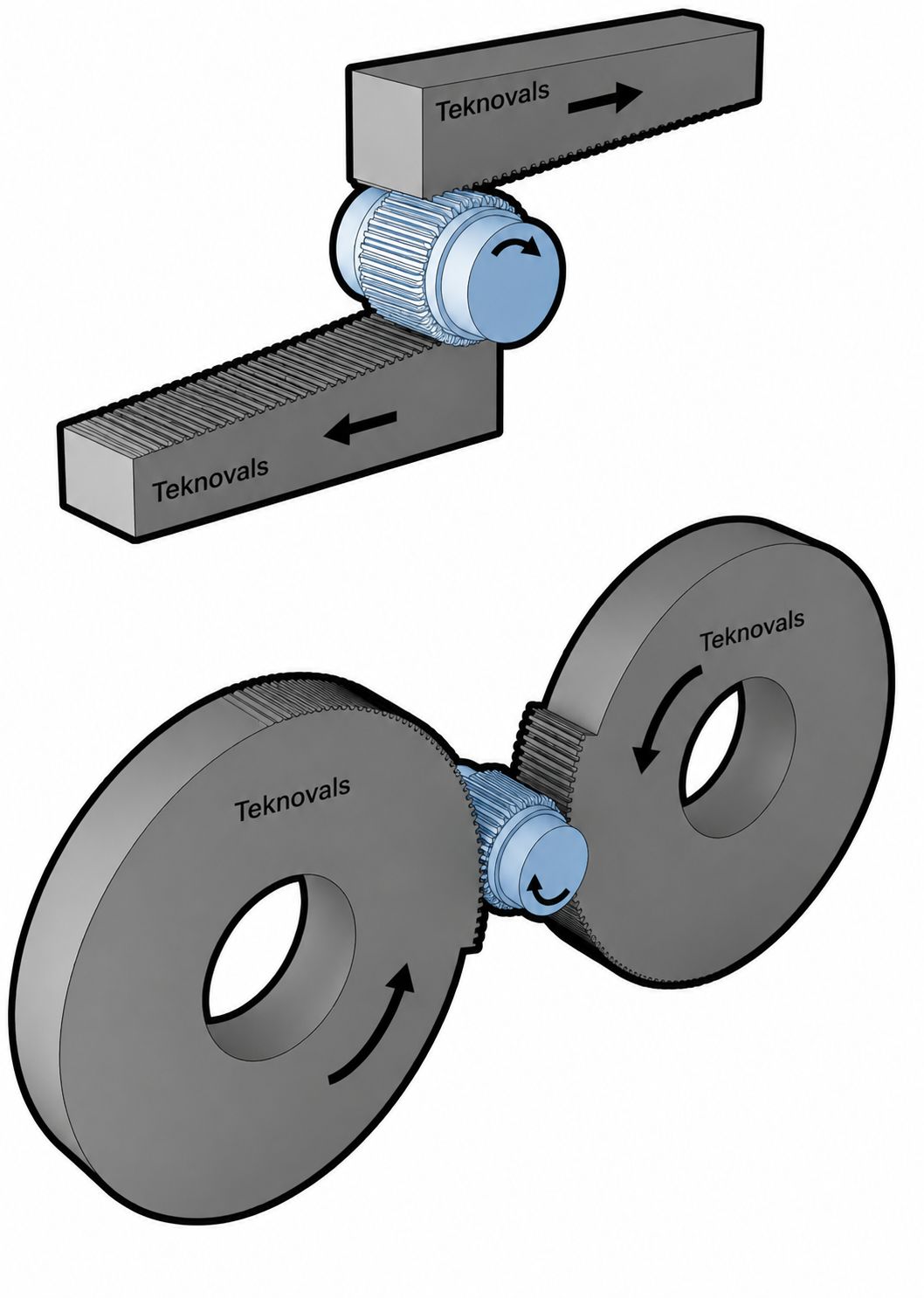
| Rack Rolling Dies | Incremental Rolling Dies |
|---|---|
| Doğrusal kalıp | Dairesel kalıp |
| Profil rack uzunluğu boyunca gelişir | Profil kalıp dairesel çevresi boyunca gelişir |
| İş parçası rack boyunca ilerler | İş parçası kalıpların dönüşüyle döndürülür |
| Feed-in rack geometrisine işlenmiştir | Feed/progresyon dairesel kalıp geometrisine işlenmiştir |
| Çevrim rack'in kullanılabilir uzunluğuna bağlıdır | Şekillendirme sekansı 360° kalıp çevresine yerleştirilmiştir |
| Uzun kalıp boyutları gerekebilir | Daha kompakt dairesel takım sistemi mümkündür |
Klasik Circular Spline Rolling'den Farkı
Incremental teknolojiyi klasik infeed circular spline rolling (bas-çek tırtıl ovalama) ile de karıştırmamak gerekir.
Konvansiyonel dairesel tırtıl ovalama topları üzerinde çevre boyunca esas olarak simetrik/sabit bir çalışma geometrisi bulunur. Kalıplar dönerken makinenin CNC kontrollü radyal ekseni kalıpları iş parçasına ilerletir.
Böylece penetrasyonu belirleyen temel unsur: Machine Infeed + Die Rotation
Incremental sistemde ise penetrasyon fonksiyonunun önemli bölümü:
Progressive Die Geometry + Die Rotation
tarafından gerçekleştirilir.
Incremental Spline Ovalamanın Avantajları
Uygun parça ve spline geometrilerinde incremental proses özellikle seri üretimde önemli avantajlar sağlayabilir:
- Çok kısa çevrim süresi
- Tek kalıp dönüşünde tamamlanan şekillendirme
- Talaş kaldırmadan üretim
- Yüksek yüzey kalitesi
- Yüksek proses tekrarlanabilirliği
- Hassas diş kalınlığı/hatve (modül) kontrolü
- Kompakt dairesel takım kullanımı
- Kremayer tarak prensibinin dairesel kalıp sistemine uygulanabilmesi
- Bazı sistemlerde aktif iş parçası tahrikine ihtiyaç duyulmaması
- Seri üretime uygun yüksek verimlilik
Özellikle eksantrik/progresif profil, düşük kütleli iş parçalarının kalıp hızına senkronize edilmesini kolaylaştırabilir ve bunun hatve kalitesi açısından avantaj sağlayabileceği söylenebilir.
Bununla birlikte incremental rolling her spline uygulaması için otomatik olarak en doğru yöntem değildir. Modül, diş sayısı, spline uzunluğu, malzeme, blank geometrisi, solid/hollow parça yapısı ve istenen tolerans sınıfı proses seçiminde birlikte değerlendirilmelidir. Örneğin uzun spline boyu uygulamalarında yürütür gibi farklı ovalama yöntemleri daha uygun olabilir.
Teknovals Incremental Spline Ovalama Takımları
Teknovals olarak Incremental Spline Ovalama Takımları üretiminde süreci yalnızca kalıbın nihai spline profilinin taşlanması olarak değerlendirmiyoruz.
Takım performansının temelini;
Spline Geometrisi → Form verme stratejisi → Progressive Profil Tasarımı → Hassas Taşlama → Profil Kontrolü
zincirinin bütünü oluşturur.
Kalıp çevresindeki progresif geometrinin doğru hesaplanması, karşılıklı kalıpların geometrik uyumu ve senkronizasyonu, spline profilinin hassas biçimde oluşturulması ve hesaplanan geometrinin CNC taşlama prosesine doğru aktarılması nihai parçanın kalitesini doğrudan belirler.
Bu nedenle üretim yaklaşımımızın merkezinde mühendislik, hassas profil taşlama ve ölçülebilir proses kontrolü bulunmaktadır.
Incremental Spline Rolling is a specialized profile rolling technology that enables spline and serration profiles to be produced with high dimensional accuracy by means of cold forming, without material removal.
Unlike conventional circular spline rolling dies, the tooth geometry of an incremental die is not constant around its entire circumference. Instead, the die incorporates a specially calculated progressive profile development along its circumference. As the die rotates, penetration into the workpiece gradually increases, allowing the spline profile to reach its final geometry within one complete revolution of the die.
For this reason, an incremental spline rolling die is not simply a circular die carrying a spline profile. Each angular section of the die represents a specific stage of the forming process.
Why Is Spline Geometry So Important?
Spline connections are widely used in automotive systems, transmissions, drivetrains, electric motors, and precision mechanical assemblies for torque transmission and accurate mechanical engagement.
Therefore, achieving only the nominal tooth dimensions is not sufficient. Profile form, pressure angle, tooth spacing and indexing error, major and minor diameters, diameter over pins (DOP), and circumferential profile distribution all directly affect the functional performance of the finished component.
In incremental rolling, this level of precision becomes even more critical because the die defines not only the final spline geometry, but also the sequence by which that geometry is formed.
In other words:
Die Geometry = Final Spline Profile + Forming Sequence
For this reason, the design of incremental rolling dies requires an advanced level of profile engineering, kinematic calculation, and precision CNC grinding compared with conventional spline rolling dies.
Why Cold Forming?
Spline profiles can be manufactured by milling, hobbing, broaching, and other machining methods. However, where the component geometry and material conditions are suitable, they can also be produced by cold rolling.
In the rolling process, no material is removed. Under the controlled pressure applied by the dies, the workpiece material plastically flows and forms the required spline profile.
The key advantages of this approach include:
- No material loss
- High surface quality
- Short cycle times
- High process repeatability
- Improved mechanical properties
Particularly in high-volume production, forming times of only a few seconds make incremental rolling a highly efficient manufacturing solution.
For a typical incremental process, we generally target a cycle time of less than 4 seconds.
How Does Incremental Geometry Work?
The fundamental characteristic of an incremental die is its progressive tooth height.
Along the circumference of the die, the profile develops in a controlled manner. In the initial contact zone, the geometry engaging the workpiece has a lower penetration depth. As rotation continues, the forming depth progressively increases.
In simplified terms, the process can be described as:
Initial Contact → Progressive Penetration → Profile Development → Full Spline Depth → Calibration / Exit
As a result, instead of the machine continuously feeding the dies radially toward the workpiece as in a conventional infeed spline rolling process, a significant portion of the required feed movement is engineered directly into the die geometry itself.
This is one of the most critical engineering aspects of incremental die design.
Why Is the Forming Process Completed in One Revolution?
In an incremental spline rolling process, the 360° die geometry itself represents one complete forming cycle.
This is because the teeth around the die circumference are not simply repeated copies of the same geometry. As the angular position of the die advances, the profile changes according to a predefined forming sequence.
1 Die Revolution = 1 Complete Forming Sequence
Continuing into a second revolution does not simply result in repeated calibration of the same final profile, as would be the case with conventional symmetrical circular rolling dies. Instead, the die geometry returns to the beginning of its progressive forming sequence.
For this reason, the process kinematics are designed around a single complete revolution. One of the most important consequences of this approach is an extremely short cycle time.
What Is the Difference Between Incremental Rolling and Rack Dies?
The fundamental forming principle of these two technologies is actually very similar.
In a rack rolling process, two opposing linear dies are used. As the workpiece rolls between them, the progressive feed-in geometry machined into the racks penetrates the material gradually and forms the spline profile. The required penetration can therefore be built directly into the rack geometry without requiring an additional active radial feed movement from the machine.
In an incremental system, the same principle is transferred from a linear rack geometry to the circumference of a circular die. For this reason, incremental rolling can conceptually be understood as “Rack Rolling Converted into a Circular Die System.”
| Rack Rolling Dies | Incremental Rolling Dies |
|---|---|
| Linear die | Circular die |
| Profile develops along the rack length | Profile develops around the die circumference |
| Workpiece travels along the rack | Workpiece rotates as a result of die rotation |
| Feed-in is integrated into the rack geometry | Feed / progression is integrated into the circular die geometry |
| Cycle length depends on the usable rack length | Complete forming sequence is arranged over 360° of die circumference |
| Long die dimensions may be required | More compact circular tooling system is possible |
Difference from Conventional Circular Spline Rolling
Incremental rolling should not be confused with conventional infeed circular spline rolling.
Conventional circular spline rolling dies generally have a symmetrical and constant working geometry around their circumference. While the dies rotate, the machine’s CNC-controlled radial axis feeds the dies toward the workpiece.
In such a system, penetration is primarily determined by: Machine Infeed + Die Rotation
In an incremental system, however, a major part of the penetration function is generated by:
Progressive Die Geometry + Die Rotation
This difference fundamentally changes both the die design philosophy and the process kinematics.
Advantages of Incremental Spline Rolling
For suitable component and spline geometries, incremental rolling can provide significant benefits, particularly in high-volume production:
- Very short cycle times
- Forming completed within one die revolution
- Chipless manufacturing
- High surface quality
- High process repeatability
- Precise control of tooth thickness and pitch / module
- Compact circular tooling
- Ability to apply the rack rolling principle in a circular die system
- No requirement for active workpiece drive in certain machine configurations
- High productivity for serial production
In particular, eccentric or progressive profile development can help synchronize low-mass workpieces with the rotational speed of the dies, which may provide advantages in terms of indexing and pitch accuracy.
However, incremental rolling is not automatically the ideal solution for every spline application. Parameters such as module, number of teeth, spline length, workpiece material, blank geometry, solid or hollow component structure, and required tolerance class must all be evaluated together when selecting the most suitable forming process. For example, in applications involving long spline lengths, alternative rolling methods based on through-feed or continuous forming principles may be more appropriate.
Teknovals Incremental Spline Rolling Dies
At Teknovals, we do not consider the production of Incremental Spline Rolling Dies as merely the grinding of the final spline profile onto the die.
The performance of the tool is determined by the complete engineering chain:
Spline Geometry → Forming Strategy → Progressive Profile Design → Precision Grinding → Profile Inspection
The correct calculation of the progressive geometry around the die circumference, the geometrical compatibility and synchronization of opposing dies, the accurate generation of the spline profile, and the precise transfer of the calculated geometry into the CNC grinding process all directly determine the quality of the finished component.
For this reason, our manufacturing approach is centered on:
Engineering → Precision Profile Grinding → Measurable Process Control
Our objective is not only to manufacture the final spline geometry, but to engineer and produce the complete forming sequence required to generate that geometry with accuracy, repeatability, and process stability.
